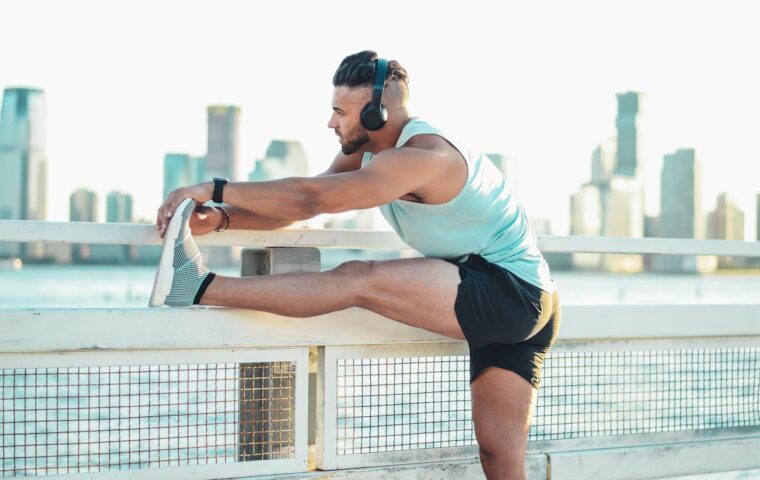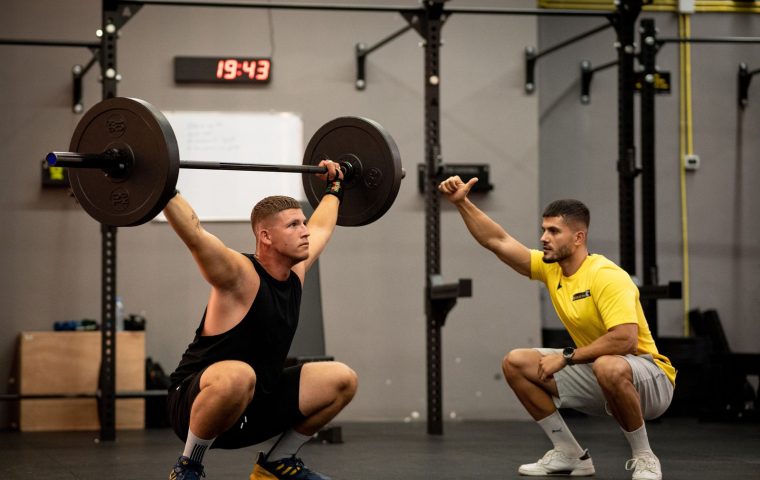


Picture a hotel room with a bed, a chair, and maybe four feet of open carpet by the window. That was all the space I had on a work trip last spring, and it was plenty to train hard for 25 minutes with nothing but a set of bands stuffed in my backpack.
That is the quiet strength of resistance bands. They weigh almost nothing, they cost less than a single month at most gyms, and they turn a corner of your bedroom into a real strength session. No dropped plates, no waiting for a machine.
This routine trains your whole body: legs, back, chest, shoulders, and core. It fits in a footprint about the size of a yoga mat, and every movement scales up or down. Let me walk you through it the way I would if you were standing in front of me.
Why bands do more than they look like they should
People underestimate bands because they are light and a little goofy looking. But the resistance a band gives is real, and it has one feature free weights do not: the tension climbs as you stretch it, so the hardest part of the rep lands right where your muscle is strongest.
That built-in ramp is gentle on your joints while still asking a lot of the muscle. If you are brand new to lifting, bands are a forgiving place to learn patterns before you ever touch a barbell. My beginner strength training guide goes deeper on how to build that base.
Bands will not replace heavy barbells for a powerlifter chasing a 400 pound squat. For the rest of us who want to be strong, mobile, and consistent, they get the job done in a fraction of the space.
The gear you actually need
You do not need a rack of every color. Start with two or three loop bands or a set of tube bands with handles, covering light, medium, and heavy tension. That range lets you match the load to the muscle: lighter for shoulders, heavier for legs.
A door anchor is worth the few extra dollars. It clips your band into a doorframe so you can pull and press from angles the floor alone cannot give you. A mat under your feet is nice, and that is the whole shopping list.
A two-minute warm-up you should not skip
Cold muscles do not like sudden tension, and small spaces tempt you to jump straight into the work. Give yourself two minutes. It pays for itself in better reps and fewer tweaks.
Run through these back to back, no rest: 20 marching high knees in place, 10 slow arm circles each direction, 10 bodyweight squats, and 10 band pull-aparts with a light band at chest height. By the end your heart rate is up and your joints are moving freely.
The full-body circuit
Here is the meat of it. Do each move for the listed reps, rest about 30 seconds between them, and repeat the whole circuit two to three times. Beginners start with two rounds. A slow, honest rep beats a fast, sloppy one every time.
1. Banded squat (legs and glutes)
Stand on the band, feet shoulder width, holding the ends at your shoulders. Sit back like there is a chair behind you, knees tracking over your toes, chest tall. Drive through your heels to stand. Aim for 12 to 15 reps.
2. Bent-over row (back and biceps)
Stand on the band, hinge forward at the hips with a flat back, arms hanging. Pull the ends toward your ribs, squeezing your shoulder blades together, then lower slowly. Think elbows back, not up. Do 12 reps.
3. Chest press (chest and triceps)
Anchor the band behind you at chest height, or wrap it across your upper back. Press both hands forward until your arms are almost straight, then return with control. Keep your wrists stacked over your elbows. Do 12 reps.
4. Overhead press (shoulders)
Stand on the band with your hands at shoulder height, palms forward. Press straight up until your arms lock out gently, then lower. Do not let your lower back arch to cheat the weight up. Aim for 10 to 12 reps.
5. Glute bridge with band (posterior chain)
Loop a band just above your knees, lie on your back, feet flat. Push your knees slightly outward against the band, then drive your hips up and squeeze your glutes at the top before lowering slowly. Do 15 reps.
6. Pallof press (core)
Anchor the band at chest height to your side. Hold the handle at your sternum with both hands and press it straight out, resisting the pull that wants to twist you. Hold two seconds, return, and repeat for 10 reps each side. If you want more moves like it, my piece on core exercises beyond crunches is worth a read.
The routine at a glance
| Exercise | Main muscles | Reps | Band tension |
|---|---|---|---|
| Banded squat | Legs, glutes | 12-15 | Heavy |
| Bent-over row | Back, biceps | 12 | Medium |
| Chest press | Chest, triceps | 12 | Medium |
| Overhead press | Shoulders | 10-12 | Light-medium |
| Glute bridge | Glutes, hamstrings | 15 | Light-medium |
| Pallof press | Core | 10 each side | Medium |
Form cues that protect your joints
Small spaces leave less room to reset, so dial in your setup before you load the band. Keep your spine long, not rounded, on every hinge. Breathe out on the effort and in on the return. If a joint pinches, shorten your range before you add tension.
Anchor points matter too. Make sure a door anchor is fully seated and the door is closed and latched so the band cannot rip it open.
How to make it harder over time
Your body adapts, and the routine should grow with you. The simplest progression is to add a round, going from two circuits to three. After that, slow your tempo so each rep takes three seconds down and one second up, which piles on time under tension without any new gear.
When a band feels easy for all your reps, step up to the next tension or shorten your stance on it to increase the stretch. These small levers keep the challenge honest for months.
If you are weighing whether a corner of your living room can compete with a membership, I broke down the tradeoffs in home workouts vs gym. For most people, the best gym is the one they will actually show up to.
Can resistance bands really build muscle, or just tone?
They build real muscle. Muscle grows in response to tension and progressive overload, and bands supply both. As long as you push close to fatigue and gradually increase the challenge, your body cannot tell the difference between band tension and dumbbell weight.
How many days a week should I do this workout?
Two to four days works well for most people, with at least one rest day between sessions so muscles can recover and rebuild. Three days a week is a reliable sweet spot for beginners and busy schedules alike.
What band strength should a complete beginner buy first?
Start with a set that includes light, medium, and heavy options rather than one band. Your legs will want more tension than your shoulders, and having a range lets you match the load to each muscle instead of forcing everything onto one band.
The best part of band training is how little it asks of you to start. Clear a small patch of floor, grab one band, and run through the warm-up tonight. Strength is built in the sessions you keep, not the ones you plan, so keep this one simple and keep showing up.