
Picture the last time you did 50 crunches in a row. Your neck ached, your hip flexors did half the work, and your lower back felt no sturdier the next morning. I have watched plenty of people grind through that exact routine, convinced that more reps equal a stronger middle, and then wonder why their back still twinges when they lift a suitcase.
Here is the part the fitness magazines rarely lead with: the core is not just the six-pack muscles on the front of your belly. It is a wrap-around system of deep and surface muscles that stabilizes your spine, transfers force between your upper and lower body, and keeps you upright when life shoves you off balance. Crunches train one slice of that system, mostly the part you can see, while ignoring the muscles that actually protect you.
When I dug into the research on spinal health, the same theme kept surfacing. Stability beats endless flexion. The exercises below ask your core to resist movement rather than just create it, which is exactly what a real-world torso has to do.
1. The Plank, Done With Intent
The plank looks simple, which is why so many people do it badly. They sag at the hips, pike up toward the ceiling, or hold a sloppy position for two minutes and call it progress. A good plank is not about time. It is about tension.
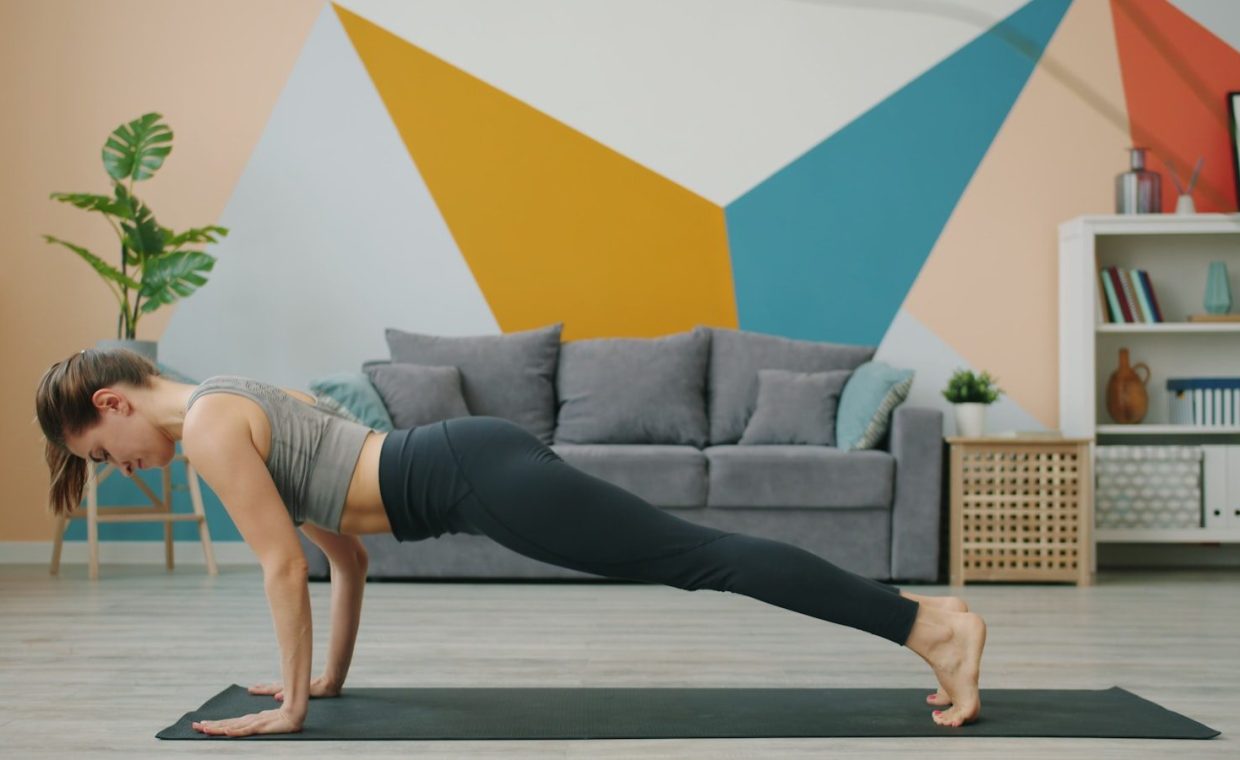
Set your forearms on the floor, elbows under your shoulders, and form one straight line from your heels to the back of your head. Now squeeze. Brace your abs as if you are about to take a light punch, tuck your ribs down, and clench your glutes. If you are shaking after 20 seconds, you are doing it right.
Quality over clock. Three sharp 20-second holds with full tension beat one limp 90-second hold. When 20 seconds feels easy, add tension, not minutes.
2. The Dead Bug
The name is goofy and the move looks almost too gentle to count. It is one of the most honest tests of core control I know, and physical therapists lean on it for a reason. It teaches your deep stabilizers to keep your spine still while your arms and legs move, which is precisely what walking, running, and carrying groceries demand.
Lie on your back, arms pointed at the ceiling, knees bent at 90 degrees over your hips. Press your lower back gently into the floor and keep it there. Slowly lower your right arm overhead and straighten your left leg toward the floor, then return and switch sides. The instant your lower back peels off the ground, you have gone too far.
Go slow. Five controlled reps per side that keep the spine pinned beat 20 sloppy ones every time.
3. The Bird Dog
Start on all fours, hands under shoulders, knees under hips. Reach your right arm forward and your left leg back until both are level with your torso, hold for a breath, then return and switch. The challenge is staying flat. Imagine balancing a glass of water on your lower back the whole time.
This move trains the muscles along your spine and the cross-body coordination that keeps your hips from twisting when you move. I like it because it exposes asymmetries fast. Most people are noticeably wobblier on one side, and that imbalance is worth knowing about.
Bird dogs and dead bugs train your core to resist twisting and arching. That resistance is what shields the lower back during everyday lifts, far more than flexion drills like crunches ever do.
4. The Side Plank
Crunches almost completely skip the sides of your torso, yet your obliques and the deep quadratus lumborum do a huge share of the work in keeping you upright and stable. The side plank fills that gap.
Lie on your side, prop yourself up on one forearm with your elbow under your shoulder, and lift your hips so your body forms a straight diagonal line. Hold. If a full side plank is too much at first, drop your bottom knee to the floor and stack the rest of your body above it. That modification keeps the work honest without forcing you into a position you cannot control.
Aim for even time on both sides. Skipping your weaker side just preserves the imbalance you are trying to fix.
5. The Pallof Press
This one needs a resistance band looped around a sturdy anchor like a door frame or a railing, and it is worth the small effort to set up. The Pallof press is pure anti-rotation, the skill your spine relies on most.
Stand side-on to the anchor, hold the band handle at your chest with both hands, and step out until there is real tension pulling you toward the anchor. Press the band straight out in front of your sternum and resist the pull that wants to twist you. Bring it back slowly. Your job is to not rotate, which sounds easy until you try it.
This is the kind of training that carries over to lifting weights, swinging a kettlebell, or simply turning to grab a child from a car seat without straining. If you are over 50 and easing back into resistance work, this move pairs naturally with the gentle approach I describe in staying strong after 50, where building stability before chasing heavy loads matters even more.
How to Put These Together
You do not need all five every day. Two or three short sessions a week is plenty for most people. A simple template looks like this: pick one anti-extension move (plank or dead bug), one anti-rotation move (bird dog or Pallof press), and one side move (side plank). Run through two or three rounds and you are done in 10-15 minutes.
Progress slowly. Add a few seconds, a rep, or a touch more band tension each week rather than chasing soreness. Core muscles respond to consistency, not punishment, and pushing into pain is how people end up sidelined.
If you have an existing back injury, a hernia, are pregnant, or feel sharp pain during any of these moves, stop and check with a qualified healthcare professional before continuing. This article is general information, not personal medical advice.
The Mindset That Keeps It Going
The honest reason most core routines fizzle is not the exercises. It is the follow-through. People go all in for a week, miss two days, then quietly quit. If that pattern sounds familiar, it is worth reading about the common workout motivation traps and how to reset them, because no plank is effective if you abandon it by Wednesday.
One more piece people overlook: recovery does the building. Your core adapts while you rest, not while you train, and skimping on sleep blunts that whole process. The link between rest and physical gains is real and well documented, which is why I keep coming back to the case for treating sleep as part of your training rather than an afterthought.
Trade endless crunches for stability work. Plank, dead bug, bird dog, side plank, and Pallof press train your core to resist movement, which is what protects your spine and powers everyday lifting. Two or three short sessions a week, done with real tension and slow progression, do far more than 100 daily sit-ups.
Are crunches actually bad for you?
Not inherently. Crunches train one part of the core, but doing hundreds while neglecting stability work leaves your back underprepared, and repeated spinal flexion bothers some people. They are fine in moderation as one tool among several, not the whole toolbox.
How long until I notice a stronger core?
Most people feel steadier within a few weeks of consistent practice, though visible changes depend heavily on body composition and overall activity. The stability and reduced back niggles usually show up well before any change you can see in the mirror.
Do I need a strong core to start these?
No. Each move scales down. Drop to your knees for planks, shorten the range on dead bugs, and use a lighter band for Pallof presses. Begin where you are and add a little challenge each week.
Strong does not have to mean shredded. A core that can brace, resist a twist, and keep your spine calm under load will serve you far longer than a stack of sit-up reps ever will. Pick two or three of these moves, do them honestly a couple of times a week, and let the small gains stack up. Your future self, the one lifting a suitcase without a wince, will thank you.