
You stand up after a long stretch at your desk, and your hips feel like they have rusted shut. Your neck cracks when you turn it. The first few steps feel stiff, almost careful, like your body forgot it was allowed to move. I hear this from new clients constantly, usually people who sit eight or nine hours a day and assume stiffness is just what aging feels like.
It usually is not. Most of that tightness comes from joints that rarely travel through their full range anymore. The fix is not an hour of yoga or a gym membership. It is roughly 10 minutes a day of deliberate, unhurried movement, done often enough that your body relearns what it can do.
Below is the exact sequence I give to desk-bound clients. No equipment, no floor mat required, and short enough that you will actually keep doing it. Move slowly and notice how each joint feels, because quality matters far more than speed.
First, understand what mobility actually means
People use "mobility" and "flexibility" interchangeably, but they are not the same thing. Flexibility is how far a muscle can passively lengthen. Mobility is your ability to actively move a joint through its range with control. You want the second one, because that is what carries over to real life, reaching the top shelf, getting off the floor, turning to grab a seatbelt.
That distinction shapes everything that follows. We are not holding long, droopy stretches. We are taking each joint through controlled motion, which loosens tissue and teaches your nervous system to trust the new range. Aim to do this once a day, as a morning reset or a break from sitting.
Breathe normally throughout. If you find yourself holding your breath, you are pushing too hard. Mobility work should feel like easing a door open, not forcing a stuck lock.
Neck and upper back, around 2 minutes
Start at the top, because the neck and upper back take the worst of screen posture. Sitting or standing tall, slowly tilt your right ear toward your right shoulder, pause for two breaths, then switch. Next, gently turn your head to look over each shoulder, slow and even.
Then do a few "chin tucks": draw your chin straight back, like making a double chin, to wake up the deep neck muscles that hours of leaning forward put to sleep. Finish with slow shoulder rolls, five backward and five forward, reaching the shoulder blades down and around.
Thoracic spine rotation, around 2 minutes
The mid-back, your thoracic spine, is built to rotate, but sitting locks it up fast. Stand with feet hip-width apart and arms crossed over your chest. Rotate your torso slowly to the right, letting your gaze follow, then to the left. Keep your hips facing forward so the motion comes from the spine, not the legs.
For a deeper version, sit on the front edge of your chair, hands behind your head, and rotate side to side at a steady, almost lazy pace, about ten each direction. This is the move my stiffest clients feel the most, and it pays off when paired with the consistency you build through a daily routine that actually sticks.
Hips, the big one, around 3 minutes
Tight hips are the headline complaint for desk workers, so this gets the most time. Start with standing hip circles: hands on hips, draw slow circles with your pelvis, five each direction, like you are stirring a giant pot. Then, using a sturdy chair or counter for balance, do leg swings, front to back and side to side, controlled rather than wild.
Finish with a gentle standing lunge: step one foot back, sink the hips down and forward, and feel the front of the back hip open up. Hold a few breaths each side.
When the hips stop moving well, the lower back often picks up the slack, a common path to nagging back stiffness. Free hips quietly protect the spine.
Ankles and lower legs, around 1 minute
Ankles get ignored, and then people wonder why squatting or even kneeling feels awkward. Standing near support, rise onto your toes and lower slowly, eight to ten times. Then plant one foot and gently rock the knee forward over the toes to mobilize the joint, keeping the heel down. Finish with a few slow ankle circles each side.
It takes barely a minute, but ankles that move well change how the whole leg loads. If you have ever felt unsteady going down stairs, this is part of why.
A full-body flow to tie it together, around 2 minutes
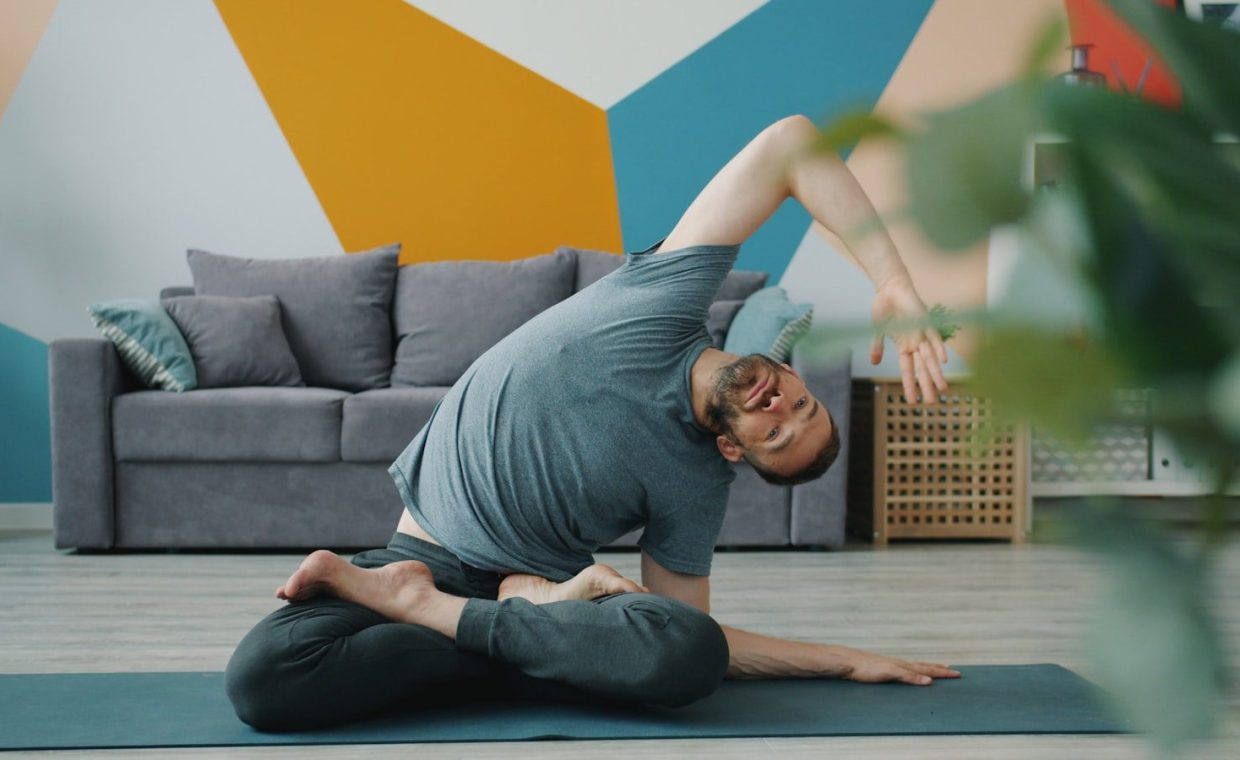
End with a move that links everything. The "world's greatest stretch" is my favorite: step into a lunge, place both hands inside the front foot, then rotate one arm up toward the ceiling and follow it with your eyes. Switch sides. It hits hips, spine, and shoulders in a single sweep.
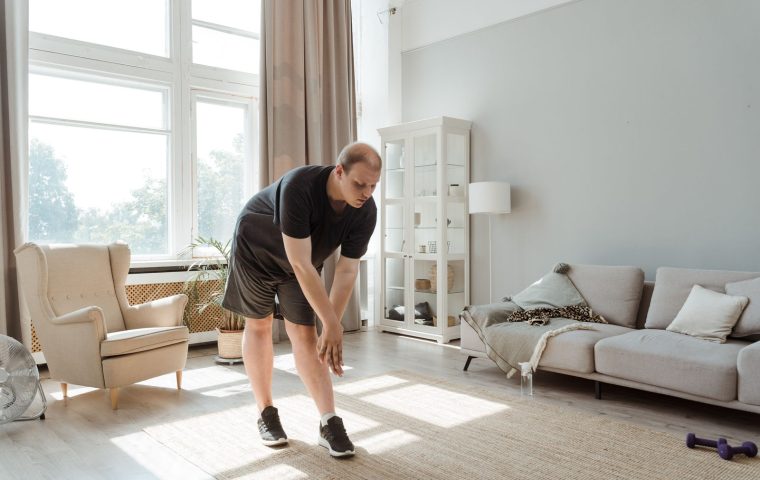
If getting to the floor is hard right now, a standing version works fine: hinge at the hips with a flat back, hands on a counter, then reach one arm up and rotate open. The goal is to feel your whole body cooperate, not to nail a perfect shape.
How to fit it into a real day
The biggest predictor of whether this works is not the moves, it is the timing. Anchor the routine to something you already do. Many clients run through it right after their morning coffee brews, or during a meeting they only need to listen to. Some prefer the evening, which pairs nicely with the kind of gentle reset I coach for people who are learning to nap without wrecking their night.
You do not need a gym for any of this, which is part of the appeal. If you are weighing where to do your broader training, my honest take on the tradeoffs lives in this look at home workouts versus the gym. Mobility itself, though, belongs at home, woven into the cracks of your day.
Mobility work should feel like relief, not sharp pain. If a movement produces shooting, pinching, or numb sensations, back out of it. Persistent joint pain, recent injury, or a medical condition deserves a conversation with a qualified healthcare professional first.
Common form mistakes to avoid
Three errors show up again and again. The first is rushing, treating mobility like a chore to blast through; slow down, because the control is the whole point. The second is forcing range by bouncing or yanking, which tells your nervous system to clamp down rather than relax. The third is the consistency trap: a heroic 30-minute session, then nothing. Ten focused minutes most days beats one long session you dread.
Neck and upper back, thoracic rotation, hips, ankles, then a full-body flow. Move slowly, breathe, and aim for daily over perfect. Quality beats quantity every time.
What to expect over the first few weeks
Do not expect to wake up loose on day three. Early on, you will mostly notice the routine itself feels smoother each time, which is your nervous system getting comfortable. Around the two to three week mark, most people tell me the everyday stuff, standing up, reaching overhead, twisting to back the car out, feels noticeably easier.
Keep your expectations grounded and your effort gentle. Bodies vary, so judge by how you move and feel rather than by a calendar.
Can I really see results from just 10 minutes a day?
Yes, for most general stiffness, because the benefit comes from frequency, not duration. Brief daily exposure to full range keeps that range available. Short, consistent practice beats one long weekly session.
Should I do mobility before or after a workout?
Either works. A gentle version before training preps the joints, while a slower version afterward aids the wind-down. On rest days, treating it as a standalone routine is perfectly fine.
What if a particular joint is already painful?
Work only within a comfortable, pain-free range and never push into sharp pain. If a joint hurts during normal daily movement, or the discomfort lingers, see a qualified healthcare professional before continuing.
Start tomorrow morning, run through the sequence once, and notice how your body feels an hour later. You are not chasing a perfect split or an impressive pose. You are giving your joints a daily reminder that they are allowed to move, and over a few weeks that adds up to a body that feels far less stuck. Keep it short, keep it regular, and let the small wins stack up.