

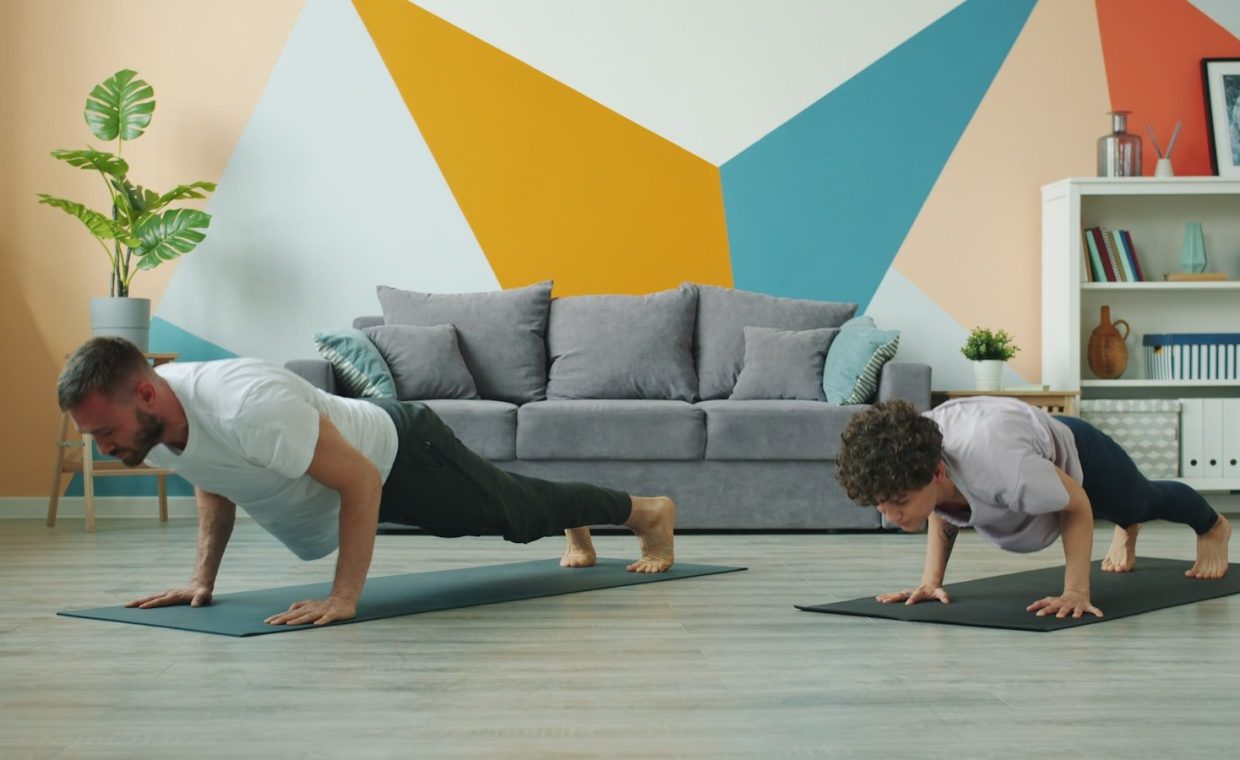
Two of my clients started the same month with nearly identical goals. One bought a mat, a single adjustable dumbbell, and a resistance band, then trained in her living room before the kids woke up. The other signed up at a busy gym near his office. A year later, both were noticeably stronger. The difference was not the equipment. It was whether the choice fit the life around it.
People want me to crown a winner here, and I get why. But after years of writing programs for new parents, shift workers, and folks who have not exercised since school, I can tell you the real answer is less about the room and more about the person standing in it.
So let me frame both options the way I would for a client across the table, then give you a way to decide that holds up after the novelty wears off.
The case for training at home
Home training removes the two excuses I hear most: travel time and self-consciousness. There is no commute, no waiting for a squat rack, no one watching you learn. You can do a focused session in the gap between meetings or while dinner is in the oven.
The cost picture is friendlier than most people expect. A set of adjustable dumbbells, a couple of bands, and a mat costs roughly a few months of gym membership, and then you own it. After that, your ongoing cost is close to nothing.
The honest limits matter too. Building serious strength eventually asks for heavier load than a starter kit provides, and learning good technique without a coach takes more patience. You also supply all the motivation yourself, which is harder than it sounds at 6 a.m.
If you go the home route, claim a specific square of floor as your training spot. A dedicated space, even a corner of a bedroom, does more for consistency than any gadget. Your brain starts associating that spot with showing up.
The case for the gym
A gym solves the equipment problem in one stroke. Heavy barbells, machines that guide your movement, cable stacks, cardio kit you would never buy for a spare room. If your goal is to keep getting stronger for years, that range of load is genuinely useful, and you will not outgrow it.
There is also the human factor. Some people focus better when they leave the house and step into a space built for one purpose. The light social pressure of others training nearby can be the nudge that gets a hesitant beginner through a full session.
The trade-offs are real. You pay every month whether you go or not, the commute eats time, and peak hours mean queues. For some, the crowd is energizing. For others, it is the friction that keeps them home on the couch.
Putting them side by side
Here is how the two stack up on the factors that actually shape whether you keep going. I have kept the numbers illustrative, since prices and habits vary a lot by location and person.
| Factor | Home workouts | The gym |
|---|---|---|
| Upfront cost | Low to moderate, one-time kit | Low, but recurring monthly fee |
| Ongoing cost | Close to zero | Ongoing for as long as you train |
| Equipment range | Limited by what you buy | Broad, hard to outgrow |
| Time per session | No commute, very efficient | Add travel each way |
| Heavy strength ceiling | Lower without big investment | High, scales with you |
| Privacy | Complete | Public, varies by crowd |
| Motivation source | Self-driven | Environment helps |
Notice that neither column is all green. A gym wins on equipment and, for some, on motivation. Home wins on cost, time, and privacy. That tension is the whole decision in miniature.
The factor that actually decides it
Strip everything else away and one thing predicts results better than the room: consistency. The best program is the one you repeat, week after dull week, long after the excitement fades. A modest home routine you do four times a week beats a brilliant gym plan you visit twice a month.
This is also where the science gets reassuring. Whether your aim leans toward endurance or muscle, the principles hold regardless of location, as the research comparing cardio and strength training makes clear. Your body responds to the work you do, not where you do it.
So when a client asks which to pick, I flip the question. I ask which option they can honestly see themselves doing on a tired Tuesday in February. That answer usually decides it.
This is general fitness information, not personal medical advice. If you have a heart condition, a recent injury, are pregnant, or have been inactive for a long time, check with a qualified healthcare professional before starting a new program. A short conversation now can save you months of setback.
How to choose without overthinking it
Run through a few plain questions, the same ones I use in a first session.
- Time: Does adding a commute make you more likely to skip? Lean home. Does leaving the house help you commit? Lean gym.
- Goal: Chasing serious, long-term strength gains? The gym's load range earns its fee. Want general fitness and to feel good? Home is plenty.
- Budget: Can you spend once and be done? Home. Prefer a small monthly cost over buying kit? Gym.
- Personality: Do crowds drain you or fuel you? Be honest. This is not a character flaw either way, it is just data.
You are also not locked in. Plenty of people I work with do both: a couple of heavy gym sessions a week plus quick bodyweight circuits at home on busy days. A hybrid keeps the equipment access without making every workout depend on the drive.
The mistakes that sink both setups
Wherever you land, the same errors trip people up. At home, the big one is half-committing: a dusty mat in the closet is not a gym. Schedule the session like an appointment and protect it.
At the gym, the classic mistake is the all-or-nothing membership. People buy a year, go hard for three weeks, burn out, and stop. Start with two or three realistic sessions a week instead. And do not skip your off days thinking more is better. Rest is when the body actually adapts, which is why planned recovery days make you fitter rather than lazier.
One more, and it cuts across both: doom-scrolling late into the night, then trying to train on five hours of sleep. Your performance and your willingness to show up both crater when you are exhausted. Building a calmer evening routine, including trimming screen time before bed, does more for your training than most supplements ever will.
Which is right for whom
For the time-pressed parent, the introvert, or anyone on a tight budget who mainly wants to feel strong and healthy, home training is an excellent, low-friction choice. You can get genuinely fit in a living room with simple kit and a plan you follow.
For the dedicated lifter chasing measurable strength, the person who focuses better outside the house, or someone who simply enjoys the atmosphere, the gym is worth every monthly payment.
And for a great many people in the middle, a blend wins. Use the gym for the heavy stuff, keep a small home setup for the days life gets in the way, and let consistency do the rest.
Can I build real muscle working out only at home?
Yes, especially as a beginner or intermediate. With adjustable dumbbells, bands, and progressive bodyweight moves, most people can build noticeable strength and muscle for a year or more before the lack of heavy load becomes a real ceiling.
Is a gym membership worth it if I only go twice a week?
Two quality sessions a week is a solid, sustainable habit, and if the gym is what gets you there, it is money well spent. The waste is paying for access you never use, not training fewer days.
How much equipment do I actually need to start at home?
Less than you think. A mat, one pair of adjustable dumbbells, and a couple of resistance bands cover most beginner and intermediate programs. Add to it only when a specific goal demands more, not because a sale tempts you.
Pick the option you will actually use on the days you least feel like it, because that is where results are built. Start smaller than your enthusiasm wants you to, stay consistent, and let yourself switch setups later if your life changes. The room matters far less than the habit you build inside it, and that habit is entirely yours to keep.