
It is 9 p.m. on a Tuesday, you have eaten cereal for dinner again, and the giant glass containers you bought in a burst of optimism are still empty in the cupboard. I see this constantly with clients, and honestly, I have lived it myself. The problem is rarely laziness. It is that most meal prep advice assumes you have a calm Sunday afternoon and the patience to cook seven identical chicken-and-rice boxes.
Real weeks do not look like that. Meetings run late, kids get sick, motivation evaporates. So the system here is built for the messy version of your life, not the imaginary organized one. The goal is not photogenic containers. It is having something decent to eat when you are tired and the alternative is takeout for the fourth time.
Here is the shift that changes everything: you stop prepping meals and start prepping components. Cook a few flexible building blocks, and you can mix them into a dozen different plates instead of getting bored of the same box by Wednesday.
Start by mapping your actual week, not your ideal one
Before you touch a pan, spend five minutes looking at the days ahead. Which nights are genuinely chaotic? Which lunches are you most likely to skip or buy? You are not planning every bite. You are spotting the two or three danger zones where you usually fall back on vending machines or delivery apps.
I tell people to aim for covering roughly half their week, not all of it. Try to prep fourteen perfect meals and you will burn out and quit. Cover four or five of the hardest moments and you have already won. Leave deliberate gaps for leftovers, a frozen backup, or a meal out, because rigid plans crack the moment life happens.
Pick one meal to conquer first, usually lunch, since it is the one most people skip or buy. Master prepping just lunches for two weeks before you add dinners. Small, boring consistency beats an ambitious overhaul that lasts three days.
Build a short, repeatable shopping list
A scattered list means a scattered fridge, and a scattered fridge means food that rots before you use it. Keep your list anchored around components: one or two proteins, two or three vegetables, a starch or two, and a handful of flavor boosters like a sauce, citrus, or fresh herbs.
When you shop, glance at the packaging so you actually know what you are buying. Learning to read a label quickly helps you compare two similar products without getting fooled by front-of-pack marketing. If that part trips you up, my colleague's walkthrough on how to read a nutrition label without getting fooled is a genuinely useful companion to this routine.
One more thing: buy a little less than you think you need. Most people overbuy fresh produce, watch half of it wilt, and then feel guilty. Underbuying slightly and topping up midweek wastes far less.
Cook in batches, but keep the elements separate
This is the heart of the system. On your prep block, 60-90 minutes once or twice a week, you cook a few components and store them apart rather than pre-assembled.
A simple component menu
- One or two proteins: roast a tray of chicken thighs, hard-boil eggs, or simmer a pot of lentils or beans. Aim for roughly 25 to 30 grams of protein per serving across your meals.
- A big tray of roasted vegetables: whatever is cheap and in season. Toss with oil, salt, roast at high heat, done.
- A neutral starch: rice, quinoa, potatoes, or whole-grain pasta that you can dress up later.
- Something raw and crunchy: chopped peppers, shredded cabbage, or washed greens for texture and freshness.
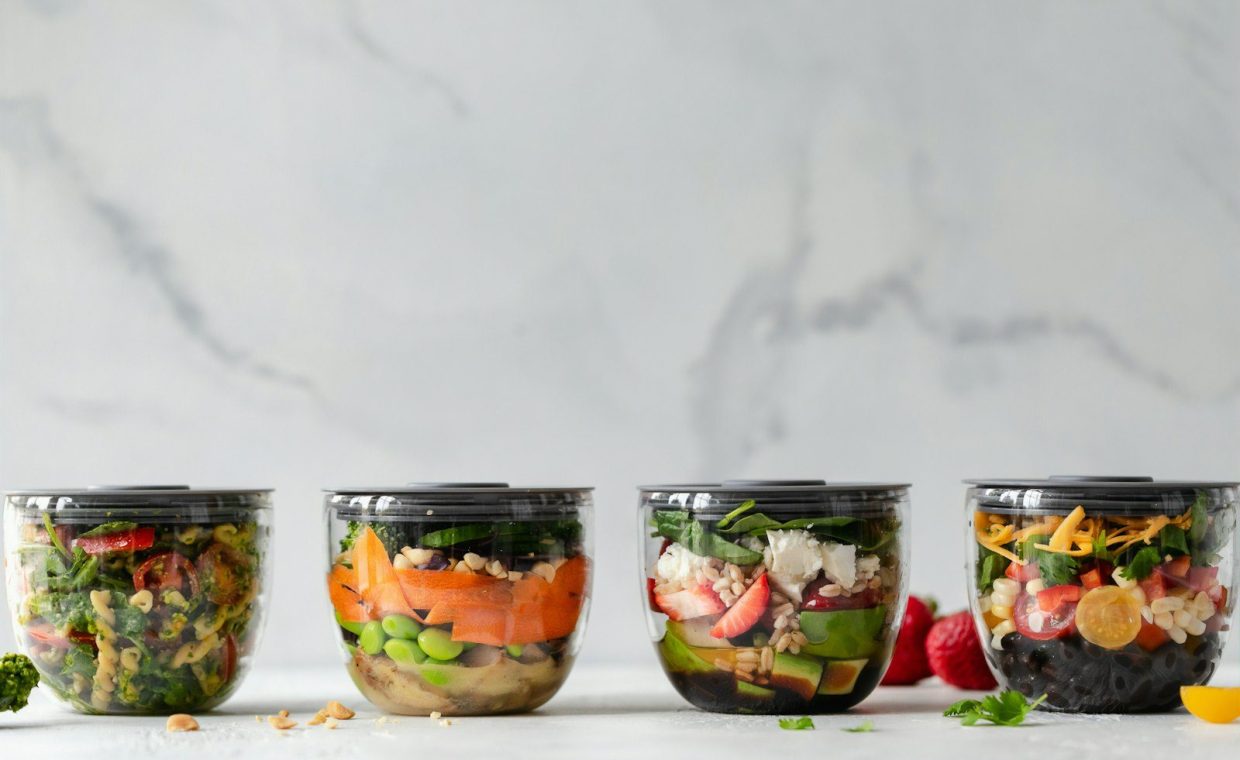
Keeping these separate means Monday's bowl and Thursday's wrap can use the same chicken without tasting identical. Pre-assembled meals get soggy and dull. Components stay flexible, which is the whole point.
Mix and match into meals you actually want
Now the fun part, and the reason this beats seven identical boxes. With four or five components, you can rotate combinations all week. The same roast chicken, vegetables, and grains become a grain bowl one day, a wrap the next, and a quick stir-fry after that with nothing more than a change of sauce.
Think in terms of a formula rather than recipes: a base (grain or greens), a protein, a vegetable or two, and something with flavor and a little fat. Hit that template and the meal will be balanced without you tracking a single macro.
The clients who stick with prep are never the ones chasing perfection. They are the ones who built a flexible kit they can throw together half-asleep.
Store it so the food is still good on day four
Good prep that spoils by Wednesday is just expensive compost. A few habits make components last and stay appetizing.
- Cool food before lidding it. Sealing warm food traps steam, and steam breeds the sliminess that makes leftovers unappealing.
- Keep dressings and sauces separate until you eat, so greens and grains do not turn to mush.
- Use your freezer as a safety net. Portion extra protein or cooked grains into the freezer. Future-you on a brutal day will be grateful.
- Label with a date. Most cooked components are best within three to four days in the fridge. When in doubt, trust your senses, not heroics.
Refrigerate cooked food within about two hours, and reheat leftovers until steaming hot all the way through. If something smells off or has been sitting out too long, do not gamble on it. A skipped meal is a minor annoyance; a foodborne illness can wreck your week.
Make it easier to keep going than to quit
The best system is the one you will repeat, so design for your real energy levels. If a 90-minute Sunday marathon feels like a chore, split it: prep proteins one evening and chop vegetables another while you are already in the kitchen. Some people thrive on a single big block; others do better with two small ones. There is no medal for doing it the hard way.
Treat nutrition as the foundation and let everything else build on top. Whole-food components handle most of your needs, which is exactly why I steer people toward food first before reaching for pills. If you are curious whether you even need extras, the honest review of which common supplements are actually worth taking is worth a read. And eating consistently well, alongside decent sleep and movement, is a big part of supporting your immune system in a sensible, non-gimmicky way rather than chasing the latest wellness trend.
This is general guidance for healthy adults, not personalized medical or nutrition advice. If you have a health condition, food allergies, or specific dietary needs, check in with your doctor or a registered dietitian who knows your situation before making big changes.
Troubleshoot the spots where prep usually fails
When a routine collapses, it is almost always one of a few predictable snags. If you got bored, you probably pre-assembled instead of keeping components separate, so vary your sauces and bases. If food spoiled, you likely overbought or sealed it warm, so scale back and cool first.
And if you simply did not have the energy to prep at all, that is normal. Keep a couple of easy backups on hand, frozen vegetables, canned beans, eggs, so an off week becomes a quick scramble instead of a surrender to delivery. Prep is a tool to make hard days easier, not another thing to fail at.
How long does prepped food actually last in the fridge?
Most cooked proteins, grains, and roasted vegetables keep well for about three to four days when cooled quickly and stored in sealed containers. Anything you want to keep longer is better off frozen in portions and thawed when you need it.
Do I have to spend my whole Sunday on this?
No. A focused 60 to 90 minute block, or two shorter sessions during the week, is plenty for component-style prep. The point is to cook a few flexible building blocks, not to plate up every meal in advance.
What if I get bored eating the same things all week?
Boredom usually comes from pre-assembling identical boxes. Keep your proteins, grains, and vegetables separate, then change the sauce, the base, or the format. The same roast chicken can be a bowl, a wrap, and a stir-fry on three different days.
Start smaller than feels impressive. Cook two or three components this week, store them apart, and notice how much calmer your evenings feel when dinner is already half-done. You can add more once the habit holds. The version of meal prep that works is the unglamorous one you will actually keep doing, and a little structure now buys back a surprising amount of time and sanity later.