
A client of mine once arrived at our first session with a printout titled "The Official Mediterranean Diet Rules." It listed forbidden foods, exact gram targets, and a brand of olive oil she felt she had to buy. She looked exhausted before she had cooked a single meal. I get why. The phrase sounds like another rigid plan with a gatekeeper.
Here is the thing I told her, and the thing I want to tell you. The Mediterranean diet is not really a diet in the dieting sense. It is a pattern of eating that grew out of how people around the Mediterranean Sea have eaten for generations, and it is one of the most studied ways of eating we have. Researchers keep returning to it because, decade after decade, it holds up.
So let me walk you through what it actually is, concept by concept, and how you might start this week without buying a single new appliance or banning your favorite foods.
What the pattern actually looks like on a plate
Strip away the marketing and the core is simple. Most of what you eat comes from plants: vegetables, fruit, beans, lentils, whole grains, nuts, and seeds. Olive oil is the main added fat. Fish and seafood show up a couple of times a week. Poultry, eggs, yogurt, and cheese appear in smaller, regular amounts. Red meat and sweets are occasional, not daily.
An ordinary dinner might be a bowl of lentil soup with a thick slice of whole grain bread, a tomato and cucumber salad dressed in olive oil, and a piece of fruit. Lunch could be canned sardines on toast with a handful of olives. None of that is exotic or expensive.
Instead of asking "what do I cut out," ask "what do I crowd in." When beans, vegetables, and whole grains take up more of the plate, the less helpful stuff naturally shrinks without you policing it.
Notice there is no calorie counting baked into the pattern, and no single food is treated as magic. That is part of why it feels livable. If you are already moving toward more vegetables and legumes, you may find my notes on simple plant-based swaps that keep meals satisfying line up almost perfectly with this approach.
Why the research keeps pointing back to it
When scientists compare different ways of eating over years, the Mediterranean pattern consistently shows up alongside better heart health, steadier blood sugar, and healthier aging. I want to be careful here, because food is not medicine and no eating pattern guarantees an outcome. But the weight of evidence is unusually consistent, and that is rare in nutrition science.
Part of the reason is what the pattern contains, and part is what it displaces. Olive oil, nuts, fish, and a rainbow of vegetables deliver fiber, healthy fats, and a range of plant compounds. At the same time, eating this way tends to push out heavily processed foods and large amounts of refined sugar.
Many of these foods overlap with the ones I recommend for calming everyday inflammation. If that angle interests you, the same olive oil, oily fish, and colorful produce feature heavily on my list of everyday anti-inflammatory foods worth eating.
The fats myth that trips people up
Here is a concept worth defining clearly, because it confuses almost everyone: fat is not the enemy in this pattern. For years we were told to fear all fat, and people still flinch when I pour a generous glug of olive oil over roasted vegetables.
The Mediterranean approach leans into unsaturated fats from olive oil, nuts, seeds, and fish. These fats help meals taste good and keep you full, which makes the whole way of eating easier to sustain. The myth to dispel is that "low fat" automatically means "healthy." A dry, fat-free meal that leaves you hunting for snacks an hour later is not winning anything.
Keep a bottle of decent extra virgin olive oil within arm's reach of your stove and use it as your default cooking and dressing fat. One small habit shifts a surprising number of meals in the right direction.
It is flexible, not a fixed menu
People often picture the Mediterranean diet as Greek salads and nothing else. In reality, the pattern adapts to whatever produce, grains, and proteins are around you. The principles travel; the specific foods do not have to.
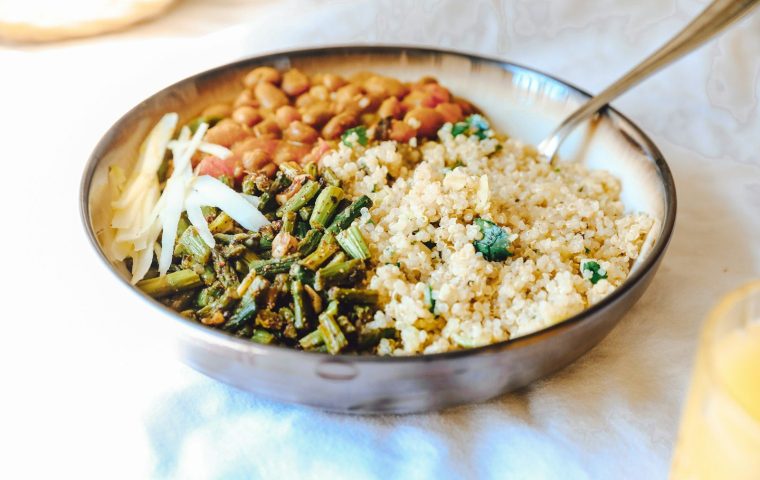
You can build a meal in this style with black beans and corn tortillas, or with chickpeas and brown rice, or with the vegetables already wilting in your fridge. I tell clients to think of it as a set of habits rather than a recipe collection. Roughly half the plate is vegetables and fruit, a quarter is whole grains or starchy plants, and a quarter is a protein that leans toward fish, beans, or poultry.
That flexibility is exactly why it survives real life. A rigid plan breaks the first week your schedule falls apart. A flexible pattern bends and keeps going.
How to start this week without overhauling everything
You do not need to clear out your pantry or shop at a specialty store. Small, repeatable changes do more than a dramatic reset that fizzles by Friday. Here is where I usually have people begin.
- Swap one daily fat for olive oil. Use it where you would have reached for butter or a heavily processed spread.
- Add one vegetable to a meal you already eat, rather than building entirely new dishes from scratch.
- Choose beans or lentils for two dinners this week. Canned is perfectly fine; rinse and go.
- Put fish on the menu once or twice. Tinned salmon, sardines, or mackerel count and cost little.
- Make fruit the default sweet, and keep nuts around for a quick, filling snack.
Build from there. Once these feel automatic, layer in whole grains in place of refined ones, and let red meat drift toward the occasional column on its own.
This is general information, not personal medical advice. If you have a health condition, take medication, are pregnant, or have a history of disordered eating, talk with a qualified healthcare professional or a registered dietitian before making big changes to how you eat.
Common worries, and what they actually mean
Two concerns come up again and again, so let me address them plainly. The first is cost. People assume this pattern is pricey, but beans, lentils, frozen vegetables, oats, eggs, and tinned fish are some of the most affordable foods in any shop. The expensive version exists, but it is optional.
The second is nutrient adequacy, especially for people cutting back on meat. Eating mostly plants is fine for most adults, though a few nutrients deserve attention so you do not end up short. If you are reducing animal foods meaningfully, it helps to know the early signs and the foods that cover the gaps, which I walk through in my piece on common nutrient deficiencies and how to spot them.
Neither worry is a reason to avoid the pattern. They are just reasons to be a little intentional, which is true of any way of eating.
Do I have to give up bread, pasta, or red meat completely?
No. Whole grain bread and pasta fit comfortably, and red meat simply moves to the occasional column rather than the daily one. The pattern is about proportion, not prohibition.
Is the Mediterranean diet good for weight management?
Many people find it helps because high fiber and healthy fats keep them satisfied, which can make eating less feel effortless rather than forced. It is not a guaranteed weight loss plan, and results vary from person to person.
What if I do not like fish?
Then lean harder on beans, lentils, nuts, eggs, and poultry for protein. The fish is a feature of the pattern, not a hard requirement, and the plant foods are doing most of the heavy lifting anyway.
If you take one thing from all this, let it be that you do not need permission or a perfect start. Pour the olive oil, add the vegetables, and let beans onto your plate a couple more times this week. Small, repeated choices are what this pattern is built on, and they are far more durable than any rulebook. Start with the next meal in front of you, and keep going from there.