
A client once told me she gave up on "eating healthier" after a single weekend, because she had read that fiber was good for her and decided to change everything at once. In one day she went from her usual white-bread-and-deli-meat routine to a giant lentil salad, a bowl of bran cereal, and an apple with the skin on. By that evening she was bloated and gassy, and she was convinced her body simply could not handle vegetables.
Her body was perfectly fine, although her pace was clearly the problem. Fiber is one of the few subjects in nutrition where almost everyone agrees that more is better, yet the way most people add it is exactly what makes them quit within a week.
I am Nadia, a registered dietitian, and I have guided dozens of people through this without the misery they expected. The plan is reassuringly boring, because it relies on three habits: go slowly, drink generously, and let your gut adjust.
First, know roughly where you are starting
Most adults eat around 15 grams of fiber a day, while general guidance lands considerably higher, closer to 25 to 30 grams. So a lot of us are running at roughly half of a sensible target. The gap is real and worth closing. It is not an emergency, though, and you do not need to close it by Friday.
You do not have to count grams forever, so for a few days just notice your meals. Ask whether any plant food with its fiber intact is on the plate, or whether most of what you eat is refined and stripped down. That quick audit tells you more than any app. If breakfast is a pastry, lunch is white rice, and dinner is pasta with sauce, the issue is not willpower; it is that whole foods barely show up.
add one fiber-rich food, not ten
The biggest mistake I see is treating fiber like a switch you flip overnight, when your gut bacteria need time to scale up. When they suddenly get a feast they have not trained for, the byproduct is gas, which is the bloating people wrongly blame on "healthy food."
So pick one meal and make one change. You might add half a cup of black beans to lunch, leave the skin on your potato, or swap a slice of white toast for whole grain. Hold that change for several days before you add the next thing, because it should feel almost too easy, which is the point. You are coaching your digestion, not punishing it.
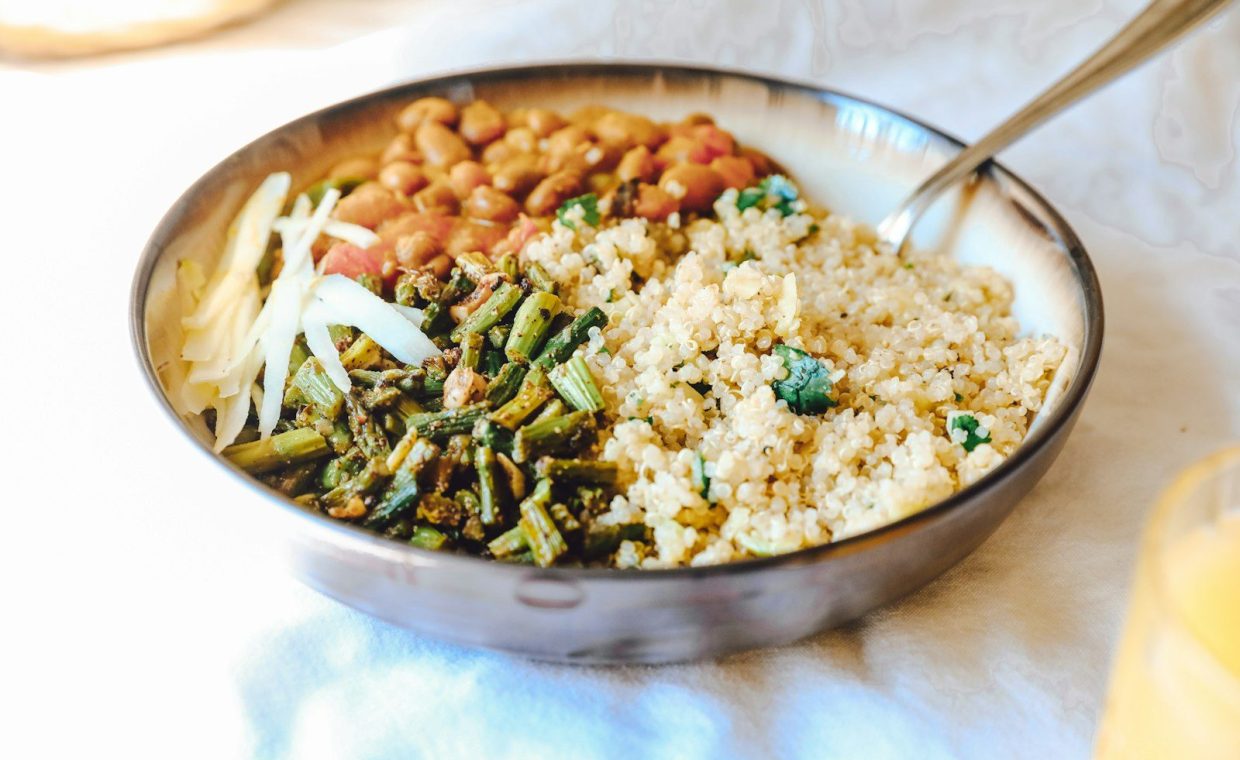
Adding fiber to a meal you already enjoy works far better than inventing a brand-new "health" meal, because the familiar habit carries the new one. A handful of berries on the cereal you already eat will stick around much longer than a quinoa bowl you have to talk yourself into.
drink more water as the fiber goes up
This is the step almost nobody hears about, and skipping it is why some people feel worse instead of better. Fiber, especially the soluble kind, absorbs water and uses it to move things through your system. Without enough fluid, that same fiber can leave you constipated and uncomfortable, which is the opposite of what you wanted.
As your fiber climbs, your water intake needs to climb with it. You do not have to force down eight glasses, although you do need to pay attention. If plain water bores you, my colleague's piece on creative ways to stay hydrated when water feels dull offers useful swaps that keep your intake up while your fiber ramps.
balance the two types of fiber
You will hear about soluble and insoluble fiber, although you do not need a biochemistry lecture, just a rough sense of what each one does for you.
Soluble fiber
This type dissolves into a soft gel, which slows digestion, helps you feel full, and feeds the beneficial bacteria in your gut. It is also the variety associated with heart benefits, including its modest effect on cholesterol, which I explore in the basics of good and bad cholesterol. You find it in oats, beans, lentils, apples, and citrus.
Insoluble fiber
This type does not dissolve, so instead it adds bulk and keeps everything moving, which is the regularity side of the equation. Picture whole wheat, brown rice, nuts, and the skins of fruits and vegetables.
The reassuring news is that you do not have to engineer a precise ratio, because a varied plate of whole foods delivers both without any spreadsheet.
spread fiber across the day
Twenty-five grams crammed into one sitting will make almost anyone uncomfortable, whereas that same amount spread across three meals and a snack barely registers. So instead of building a single fiber-heavy dinner, aim to include a modest amount at each meal.
That might mean berries or oats at breakfast, beans or extra vegetables at lunch, a piece of fruit or a small handful of nuts as a snack, and whole grains with a vegetable at dinner. This steady rhythm keeps your digestion on an even keel, and as a bonus it tends to keep your energy steadier too.
This is general information rather than personal medical advice, so please treat it that way. If you live with a condition like IBS, have a history of bowel obstruction, or are managing diabetes, talk with a qualified healthcare professional before making large dietary changes. Some people do better with specific types of fiber, and a professional can tailor a plan to you.
make it survive a busy week
Good intentions tend to collapse under a chaotic schedule, which is why the people who succeed are rarely more disciplined than everyone else. They simply make the fiber-rich option the easy one, which means a little planning while you have the energy, so the tired version of you can coast.
Cook a big pot of lentils or brown rice and keep it ready in the fridge, and wash and chop your vegetables on Sunday so they are easy to grab. Keep canned beans and frozen vegetables on hand for the nights when cooking feels impossible. If batch cooking is new to you, my walkthrough on simple meal prep for busy weeks shows how to set it up without losing your whole weekend.
One more honest tip is to never overlook the frozen and canned aisles, because they quietly do a lot of work. Frozen peas and canned chickpeas are just as fiber-rich as the fresh versions, often cheaper, and they do not guilt-trip you from the crisper drawer when you forget about them.
What to do if bloating still shows up
Even with a deliberately slow ramp, some gas and bloating early on is completely normal as your gut bacteria rebalance. For most people the discomfort settles within a couple of weeks, and when it does, that fading is a sign of adjustment rather than damage.
If the bloating is genuinely bothering you, dial back to the last amount that felt comfortable and hold there longer before nudging up again. Drinking enough water and chewing slowly both help considerably, while beans and lentils tend to be the gassiest starters. If they hit you hard, lead instead with gentler sources like oats, carrots, and bananas first.
Severe or persistent abdominal pain, blood in your stool, or significant changes in your bowel habits are not normal "fiber adjustment." They deserve a conversation with a doctor rather than a tweak to your salad.
How long should I take to reach a higher fiber intake?
There is no fixed rule, although a few weeks is reasonable for most people who want a comfortable transition. A common approach is to add roughly 5 grams every several days while watching how you feel. Slower is fine, because moving faster is what causes the discomfort that makes people quit.
Are fiber supplements as good as food?
Whole foods deliver fiber alongside vitamins, minerals, and a variety that your gut bacteria thrive on, so real food should come first. A supplement can help fill a stubborn gap, but treat it as a backup rather than the main plan, and introduce it just as gradually as you would any food.
Can I eat too much fiber?
It is possible, especially if you increase your intake quickly or do not drink enough water, which together can lead to bloating or constipation. For most people, though, the bigger problem is eating too little rather than too much. If you keep your fluids up and ramp gradually, you are unlikely to overshoot.
Fiber is not a project you finish so much as a small habit you quietly keep. Add one thing, drink a little more water, and let your gut catch up before the next change, because that patience is what protects you. Do that consistently and the bloating most beginners fear usually never arrives. Be gentle with yourself, and if something ever feels off, check in with a professional who knows your history.