
A patient once pulled out her phone in my office to show me the food scale she kept on her kitchen counter. She weighed everything: oats, chicken, almonds, even the splash of milk in her coffee. It worked beautifully at home, and fell apart the moment she sat down in a restaurant or at a friend's table. The scale stayed home. Her sense of a normal portion never came with her.
That gap is what I want to close here. You already carry a measuring tool everywhere you go, and it never needs charging or calibrating. It is attached to your wrist.
The hand method is not about precision down to the gram. It is about a steady, repeatable way to picture a balanced plate when there is no scale in sight, which for most of us is most of the time.
Why your hand is a surprisingly good ruler
Here is the part I love as a clinician: your hand roughly scales with your body. A larger person tends to have larger hands and a higher calorie need, while a smaller person has smaller hands and a lower one. So when you measure a portion against your own palm, you are getting a serving sized for you, not for some average stranger in a textbook.
It is not perfect. Hand size and appetite do not track in a tidy one-to-one line, and athletes or people recovering from illness may need more. But as a starting point that you can apply at any table without weighing anything, it holds up well.
Protein: a palm (the flat part, not the fingers). Vegetables: a fist. Carbohydrates: a cupped hand. Fats like oil, butter, nuts, or cheese: a thumb. Build most meals from these and you have a balanced plate.
Protein: think palm, not platter
For most meals, one palm-sized serving of protein is a sensible target: chicken, fish, tofu, beans, or a couple of eggs. That works out to somewhere around 20 to 30 grams of protein for many people, which is a reasonable amount to support muscle and keep you full.
A quick example. A chicken breast at a restaurant is often two or three palms, not one. That does not make it a disaster, but it helps to notice it. If you are more active or building strength, you might use two palms per meal. The palm gives you a baseline you can scale up or down on purpose rather than by accident.
Vegetables: a fist, and then some
Vegetables are the one place I happily tell people to be generous. Aim for at least a fist of vegetables at lunch and dinner, and more is genuinely fine. They bring fiber, water, and volume, so they fill the plate and your stomach without crowding out much room for excess.
If your plate looks a little bare on the green side, a fist is the floor, not the ceiling. Two fists of roasted vegetables next to a palm of salmon is a meal I would sign off on any day.
Carbohydrates and fats: where portions quietly creep
This is where most plates drift over time, and it is rarely dramatic. A cupped hand of cooked rice, pasta, potato, or oats is a steady serving for one meal. The trouble is that restaurant and packaged portions often run to two or three cupped hands, and the eye adjusts to whatever is in front of it.
Fats are calorie-dense, so the measure shrinks to a thumb: roughly a tablespoon of oil, a small handful of nuts, or a modest piece of cheese. Olive oil is wonderful for you, but a generous pour over a salad can quietly add a few hundred calories. The thumb keeps it in proportion rather than off the menu.
This is general guidance for everyday eating, not a treatment plan. If you live with diabetes, kidney disease, an eating disorder history, or you are pregnant, your portion targets may be different. A registered dietitian or your doctor can tailor this to you, and that personal advice should always win over a rule of thumb.
Putting a whole plate together
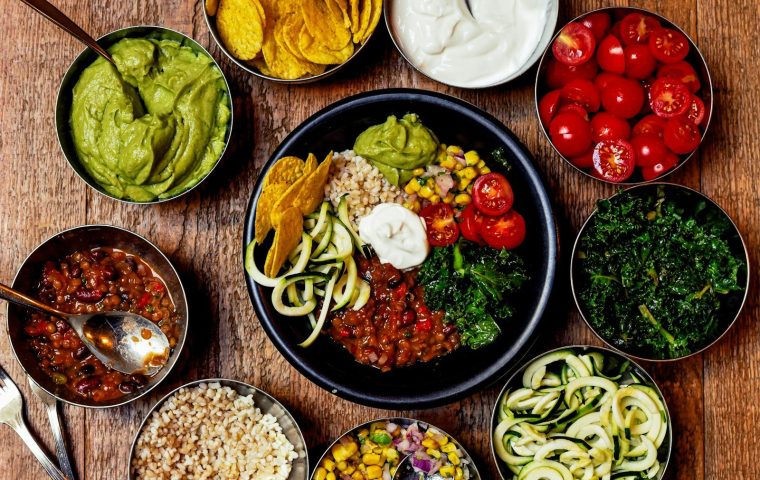
Picture a single dinner plate. Half of it is vegetables, a fist or two. A quarter is protein, one palm. The last quarter is carbohydrates, a cupped hand. Add a thumb of fat for cooking or dressing, and you have a meal that covers the main bases without any math.
I find this especially handy away from home, where most slip-ups happen. If you struggle with restaurant menus in particular, it pairs well with the practical tactics in our guide to the most common mistakes people make when eating out. The hand method gives you the picture, and those tips help you order toward it.
A real example from the table
Say you order a stir-fry. It arrives as a small mountain of noodles with a scattering of chicken and a few peppers. Mentally, you want roughly a cupped hand of noodles, a palm of chicken, and a fist of vegetables. In practice you might eat the chicken and vegetables first, take about half the noodles, and box the rest. No scale, no scene, just a quiet adjustment toward balance.
The myth this method gently dismantles
The belief I run into most is that healthy eating requires exact tracking, that you have to count every gram or you are doing it wrong. For a few people, detailed tracking is genuinely useful for a short stretch. For many more, it becomes a source of anxiety and an all-or-nothing trap. The scale gets put away, the tracking app goes unopened, and people decide they have failed.
You have not failed. You have simply outgrown a tool that was never meant to be permanent. I have watched readers rebuild a calmer relationship with food after years of strict dieting, and approximate measures were a big part of it. If that pattern sounds familiar, the story of how one reader rebuilt her diet after years of yo-yo dieting shows how forgiving, repeatable habits tend to outlast rigid rules.
Protein equals one palm. Vegetables equal one to two fists. Carbohydrates equal one cupped hand. Fats equal one thumb. Adjust up if you are active, down if you are less so, and let how you feel and your energy across the day guide small corrections.
Using portions as feedback, not punishment
Portions are information, not a verdict on your willpower. If you finish meals stuffed and sluggish, your cupped hand of carbs might be creeping toward two. If you are ravenous an hour later, you may need a bigger palm of protein or an extra fist of vegetables. Adjust and move on.
Steady portions also ripple outward into the numbers your doctor tracks. Calmer, more consistent meals tend to support healthier blood sugar and blood pressure over time, the kind of measures you might watch with a home blood pressure monitor compared against your clinic readings. None of that requires perfection, only a direction you can repeat at most meals, most days.
Does the hand method work if I have very large or very small hands?
Mostly yes, because hand size tends to scale loosely with body size and calorie needs. If your hands feel out of step with your appetite, treat the measures as a starting point and adjust based on hunger, energy, and how meals leave you feeling.
Is this accurate enough to lose or maintain weight?
For many people, yes, because consistency matters more than precision. Approximate portions you actually keep up tend to beat exact tracking you abandon after a few weeks. If you have specific medical or weight goals, ask a dietitian to fine-tune the amounts.
What about snacks and drinks?
The same logic applies. A thumb of nuts or a cupped hand of fruit makes a reasonable snack. Liquid calories slip past the hand entirely, so keep an eye on sweetened drinks and large coffees, which can quietly add up without filling you.
Try it at your next meal. Look at your plate, picture a palm, a fist, a cupped hand, and a thumb, and adjust one thing. You will not get it perfect, and that is the point. A method you can use at every table beats a scale you only use at home, and over a year of meals, that difference adds up to far more than any single perfect dinner ever could.