
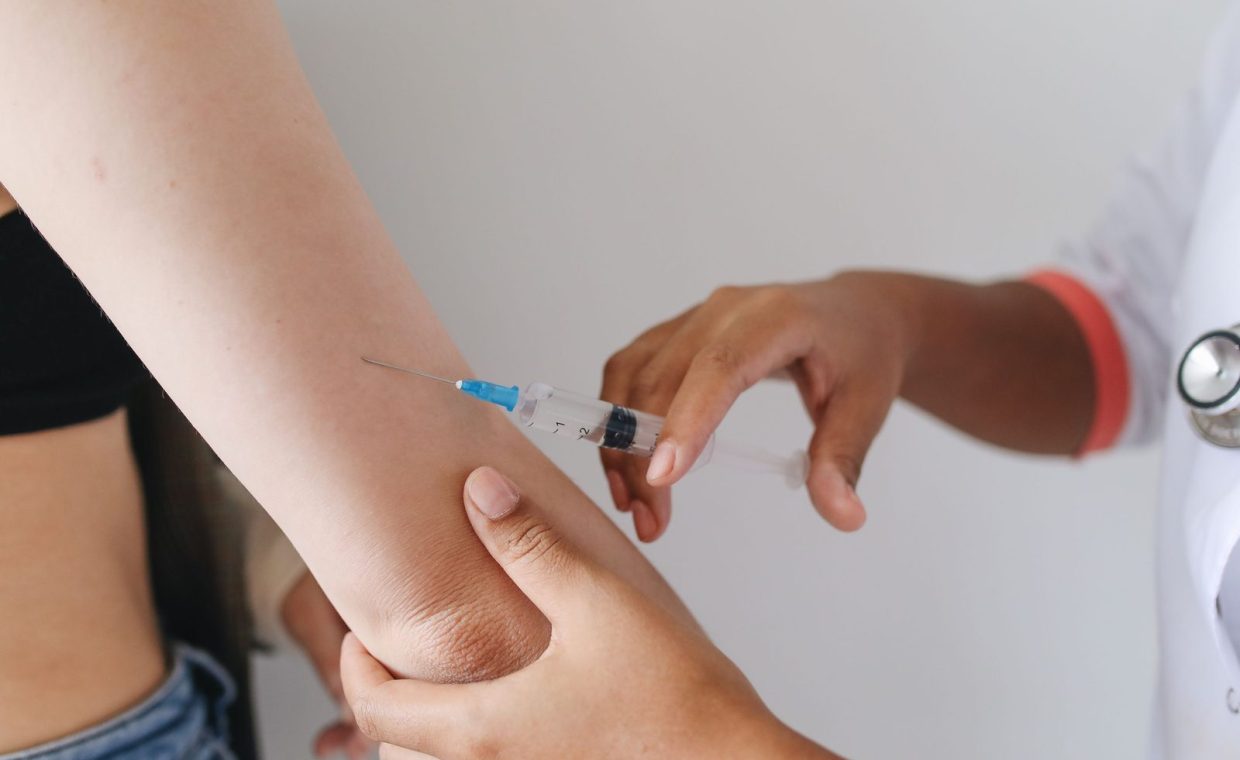
A patient once asked me, mid-appointment, why she had to "put a disease in her arm" to avoid getting that disease. It is a fair question, and honestly a good one. The logic of vaccines sounds backwards until you see what is actually happening under the skin.
So let me walk you through it the way I would in the office, slowly and without the scare tactics. No miracle language, no fear. Just how this technology works, what it can and cannot do, and where the common worries come from.
I have given thousands of these injections over the years, and the questions are remarkably consistent. If you have wondered any of this yourself, you are in good company.
What a vaccine actually is
A vaccine is a training tool for your immune system. It shows your body a harmless preview of a germ, a tiny fragment or a weakened version, so your defenses learn to recognize the real thing later.
Think of it like a fire drill. Nobody sets the building alight. You practice the exit route while everything is calm, so that if a real fire ever starts, your body already knows where the doors are. The vaccine is the drill. The actual infection would be the fire.
Here is the part that trips people up: a vaccine does not give you the disease it protects against. The preview it contains cannot make you sick the way the live germ would, because it is either a fragment, an inactivated copy, or a set of instructions for one harmless piece of the virus.
How your immune system learns from it
When that preview arrives, your immune system treats it as a stranger and gets to work. It builds antibodies, which are proteins shaped to latch onto that specific germ, and it creates memory cells that file the encounter away for the future.
Those memory cells are the whole point. Months or years later, if the real pathogen shows up, your body does not start from scratch. It recognizes the intruder fast and mounts a defense before the infection can take hold or turn serious.
This is why you might feel a little off for a day after a shot. A sore arm, mild tiredness, sometimes a low fever. That is not the disease. It is your immune system rehearsing, and the soreness usually fades within a day or two. In my experience, the people who feel a bit run-down afterward are often the ones building a robust response.
Feeling tired or achy for a day after a vaccine is a sign your immune system is responding, not a sign something has gone wrong. Resting, drinking water, and giving it 24 to 48 hours usually settles it.
The main types, in plain terms
Not all vaccines are built the same way, and the differences are worth knowing because they explain a lot of the headlines you have seen.
Inactivated and live-attenuated
Inactivated vaccines use a killed version of the germ. The flu shot is a familiar example. Live-attenuated vaccines, like the measles vaccine, use a weakened-but-living version, which tends to produce strong, long-lasting protection. Because they contain a live form, they are usually not given to people with seriously weakened immune systems, which is something we always check first.
Subunit and mRNA
Subunit vaccines use just one recognizable piece of the germ, often a surface protein, rather than the whole thing. The mRNA approach, which many people first heard about recently, goes one step further: it delivers a short set of instructions that tells your own cells to make that one harmless protein, which your immune system then learns to recognize. The instructions break down quickly and never enter the part of your cell that holds your DNA.
Why timing and boosters matter
People often ask why one dose is not always enough, or why protection seems to fade. The answer is that immune memory is not always permanent, and some germs change over time.
Boosters are reminders. They tell your memory cells to top up their numbers and sharpen their aim. For something like tetanus, that reminder is needed every several years. For flu, the virus shifts enough each year that the recipe gets updated, which is why an annual shot exists.
The childhood schedule looks crowded for a reason. It is timed to protect kids during the windows when certain infections are most dangerous to them, not to overload anyone. If the spacing of a schedule worries you, that is exactly the kind of thing worth raising with your own clinician, who can walk you through the why for each one.
This article is general education, not medical advice for your specific situation. Your age, pregnancy status, allergies, and medical history all shape which vaccines make sense for you. A conversation with a qualified healthcare professional is the right place to sort out the particulars.
The myths worth clearing up
Let me address the worries I hear most, because they deserve straight answers rather than dismissal.
"Natural immunity is always better." Catching an illness can produce immunity, true, but the price of admission is the illness itself, with all its risks. Vaccines aim to give you the protection without making you live through the dangerous part. For some diseases, the gap in risk between the two paths is enormous.
"There are too many ingredients I cannot pronounce." The components in a vaccine are present in tiny, measured amounts, and many of them are substances your body already handles every day. A hard-to-say name on a label is not the same as a hazard. This is the same careful reading I encourage when people scan supplement bottles or any product claiming health benefits.
"I am healthy, so I do not need them." Vaccines are not only about you. When enough people in a community are protected, the germ struggles to spread, which shields newborns, older adults, and people who cannot be vaccinated for medical reasons. Your healthy immune system can be part of someone else's safety net.
How vaccines fit into the bigger prevention picture
I see immunization as one tool among several, not a standalone fix. It sits alongside the unglamorous habits that quietly keep you well: decent sleep, movement, and sensible eating. None of these replace the others.
If you are building a prevention routine, vaccines pair naturally with the rest. Keeping an eye on your numbers at home, the way I describe in this comparison of home and clinic blood pressure readings, is part of the same mindset of catching problems early. So is steering clear of the usual oversights I cover in common prevention mistakes and how to fix them.
And while no food strengthens your immune system the way a vaccine trains it, a steady diet built around anti-inflammatory foods worth putting on your plate supports your overall resilience. Think of it as keeping the whole system in good working order rather than chasing any single magic fix.
A vaccine shows your immune system a harmless preview of a germ so it can build memory and respond fast to the real thing. The common side effects are mild and brief. Types differ, boosters keep protection sharp, and the biggest myths fall apart on a closer look.
Can a vaccine give me the disease it is meant to prevent?
No. Vaccines use fragments, inactivated copies, or instructions for a single harmless protein, none of which can cause the full illness. A brief sore arm or mild tiredness is your immune system practicing, not an infection.
Why do some vaccines need boosters and others do not?
It depends on how long your immune memory lasts and whether the germ changes. Tetanus needs a top-up every several years, flu shifts enough to warrant a yearly update, and some childhood vaccines provide lasting protection after the initial doses.
I am generally healthy. Do I still benefit from vaccines?
Yes, in two ways. They lower your own risk of serious illness, and they help protect people around you who cannot be vaccinated. A strong immune system still benefits from a head start against a dangerous germ.
If any of this raised a question specific to you, take it to your own doctor or nurse. That is genuinely the best use of an appointment, and a good clinician will happily talk it through. Vaccines are not a leap of faith. They are a well-studied way of letting your body practice for a threat before it ever arrives, and understanding the how tends to make the decision feel a lot calmer.