
Every January, my inbox fills with the same message in slightly different words. Someone started a new habit on the first, kept it for nine or ten days, then watched it collapse by the third week. They want to know what is wrong with them, but the answer is almost always nothing, because the habit was built to fail.
I have spent years helping people change how they eat, and the pattern is hard to miss. The folks who succeed are rarely the most disciplined; instead, they set things up so the right choice took less effort than the wrong one. That is a learnable method rather than a personality trait, so anyone can adopt it.
So let me walk you through what behavior science says about why some habits stick while most fall apart. There is no shame and no hustle here, just the mechanics of how change works.
What a habit really is
A habit is a behavior that has become automatic through steady repetition. Researchers describe it as a loop with three parts: a cue that triggers it, the routine itself, and a reward that signals the loop was worth repeating. Reaching for your phone the moment you wake up is a habit, although it is one you never chose.
Here is the part many people overlook. A habit is not the same thing as a goal, because "lose 20 pounds" is a goal while "eat a vegetable with lunch" is a habit. Goals live in the future and feel heavy, whereas habits live in a single small moment you can control today, and that moment is the only thing that moves the goal.
You do not rise to the level of your motivation; instead, you fall to the level of your systems. Motivation is the spark, but careful design keeps the fire burning on the days you do not feel like it.
Why willpower is the wrong engine
The most common mistake I see is treating willpower as the fuel for change. People assume that wanting it badly enough will carry them through, but then a stressful week arrives and the wanting runs dry.
Willpower is real, yet it remains a limited and unreliable resource. It dips when you are tired, hungry, stressed, or distracted, which describes most of ordinary life. A habit that only survives on a good day is not truly a habit; it is merely a performance.
The fix is to lean on your environment rather than on raw grit. If you want to snack on fruit, put the fruit bowl on the counter and bury the chips on a high shelf in another room. You are not weak for taking the easier path; you are clever for making the good path the easy one.
Start absurdly small
When people decide to build a new habit, they almost always begin too ambitiously. They imagine one full hour at the gym, five days a week, starting Monday. The size feels impressive, and that is precisely why the plan folds within a fortnight.
Behavior researchers who study tiny habits recommend the opposite approach. Shrink the new behavior until it becomes almost laughably easy, so not "meditate for 20 minutes" but "take three slow breaths." Starting is the hardest part, so make that first step effortless, because consistency beats intensity every time.
Once the small version becomes automatic, it tends to grow on its own, because you have built the groove first and can then let the volume rise. Three breaths gradually become ten, and chopping one vegetable turns into making the whole salad.
Pick a habit so small that you cannot say no to it, even on your worst day. If it feels almost too easy, then you have it exactly right, because the goal this month is simply showing up, not impressing anyone.
Anchor the new habit to an old one
A new behavior needs a reliable cue, and the best cue is something you already do without conscious thought. This technique is sometimes called habit stacking, and it works because you are borrowing automaticity you have already built.
The formula is reassuringly simple: after I do [the thing I already do], I will do [the new tiny habit]. After I pour my coffee, for example, I take my vitamin. The existing habit becomes the trigger, so you are no longer relying on memory or a phone alarm you will eventually ignore.
This is one reason a steady daily structure helps so much, because if your mornings are chaos, then your anchors have nothing solid to attach to. Building even a loose rhythm, the kind I describe in our guide to small changes for better work-life balance, gives new habits a stable place to settle.
The myth of 21 days
You have probably heard the claim that it takes exactly 21 days to form a habit. It is a tidy number, and it is also wrong. The figure traces back to a 1960s observation about how long patients took to adjust after surgery, which has nothing to do with habit formation.
When researchers actually measured how long automaticity takes to develop, the answer turned out to be considerably messier. For most everyday habits it landed around two to three months, with a wide range depending on the person and the behavior. A glass of water with breakfast locks in faster than a daily run.
This matters because if you expect a habit to feel automatic by day 21 and it does not, you assume you have failed and quit. Knowing the realistic timeline instead lets you push through the awkward middle stretch, which is exactly where most people give up.
This is general information, not personal medical advice. If you are managing a condition, taking medication, or making a significant change to your diet or activity, please check in with a qualified healthcare professional first.
Plan for the day you miss
Here is a truth that no motivational poster will admit: you are going to miss days. The difference between people who keep their habits and people who lose them is never perfection; it is how they handle the slip.
The hidden trap is all-or-nothing thinking, where you miss one workout, decide the week is ruined, and abandon the effort. One missed day does almost nothing on its own; it is the second and third missed days, the slow spiral, that does the real damage. So the rule I give every client is simple: never miss twice. Skip a day if you must, then return to the tiny version the next day.
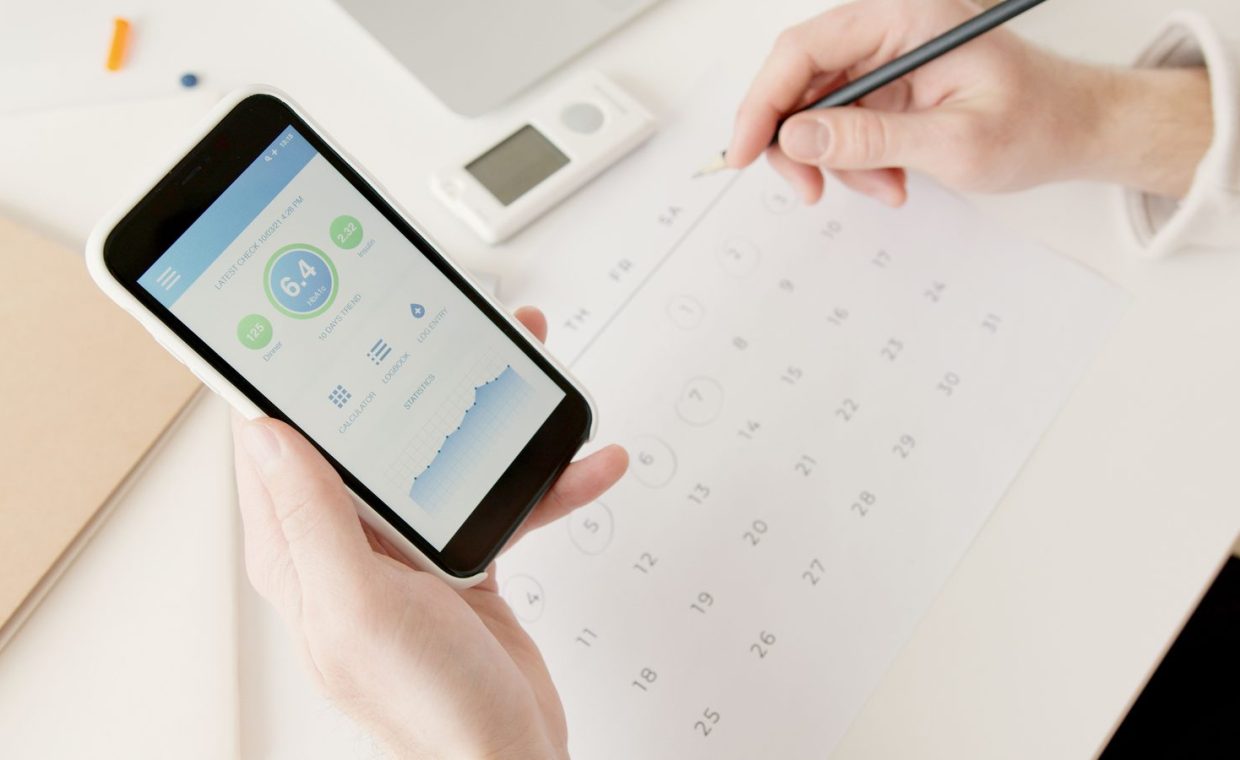
It also helps to track the streak somewhere you can see it, such as a calendar checkmark or a journal note. Writing a quick line about how the habit felt keeps many people motivated, which is part of why a simple journaling habit pairs so naturally with any other change you are attempting.
Make the reward feel real
Your brain repeats whatever feels good, yet many healthy habits only pay off slowly. Better sleep, lower blood pressure, and steadier energy all take weeks to show up, long after the moment you needed the encouragement.
So you should build in a reward you can feel right now. Pair the habit with something pleasant, such as a favorite podcast saved for your walk, and notice the small wins, like the way a walk outside clears your head. Time outdoors is a reward in itself, and the link between nature and everyday wellbeing is one of the more reliable findings in the research.
Make it small, anchor it to something you already do, design your environment to help, expect two to three months before it feels automatic, never miss twice in a row, and reward yourself in the moment.
How many new habits should I start at once?
Just one, or at most two, because each new habit competes for the same limited pool of attention and willpower. Get one running on autopilot before you add the next.
What if I keep forgetting to do the habit?
Forgetting is usually a cue problem rather than a motivation problem. Attach the habit to something you already do daily, and place a visible reminder where the action happens, like running shoes parked by the door.
Is it harder to break a bad habit than to build a good one?
Often yes, because bad habits already carry strong cues and instant rewards. The most reliable approach is to make the bad habit harder to start while replacing it with a better behavior that meets a similar need.
If your past attempts collapsed, please do not read that as a verdict on you. It is simply evidence that the design needed work. Start smaller than feels reasonable, anchor it to something solid, and give yourself room to stumble without quitting. Do that, and the habit stops being something you force and becomes something you simply do.